Attics · ceilings · garage ceilings
Attic Insulation Contractors in Wausau, WI
If your house grows icicles as long as your arm by February, the problem is in the attic, not the gutters. Warm air leaking up through the ceiling melts the snow from underneath, and the cold eaves freeze it again.
Our attic work goes in this order: seal the ceiling, then insulate it to at least R-49, the ceiling minimum under Wisconsin's dwelling code for Marathon County. Most of the time that means blown-in cellulose or fiberglass over sealed top plates. Spray foam goes where blown-in can't: roof decks, cathedral ceilings, knee walls and garage ceilings with a room above. (Walls below the ceiling are their own job: wall insulation.)
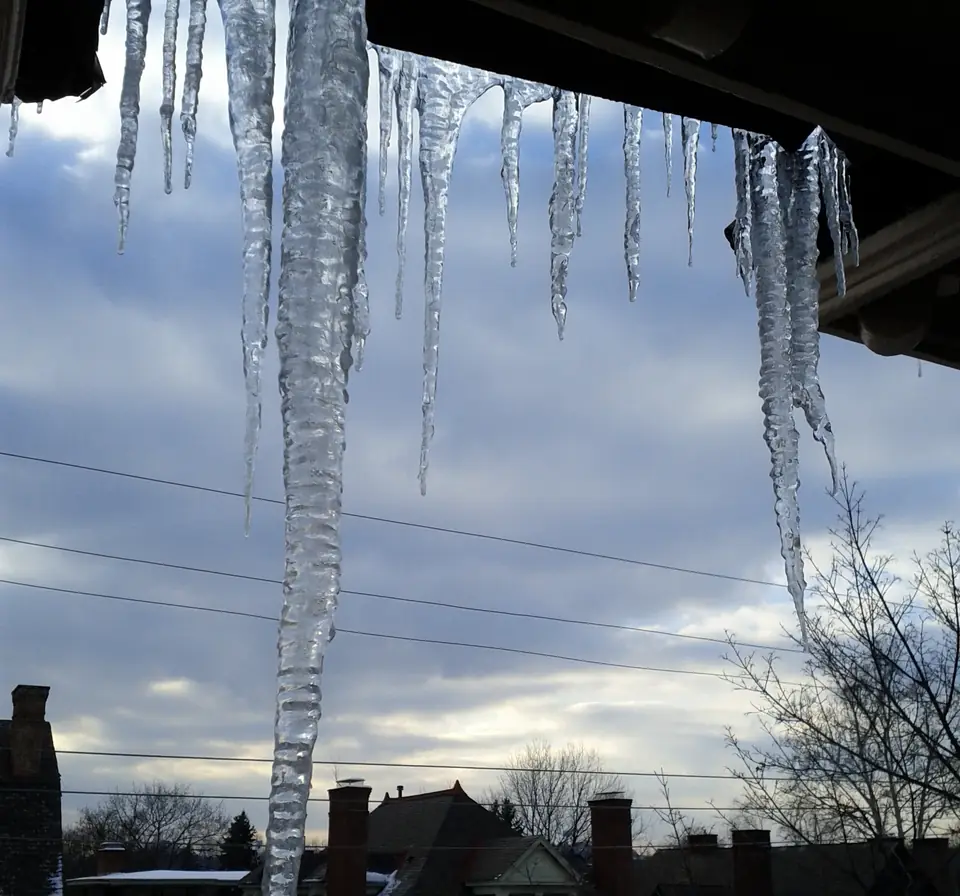
Why Ice Dams Start With Attic Insulation and Air Leaks
For an ice dam you need three things: snow on the roof, a roof deck above freezing higher up, and an overhang below freezing. Wausau supplies the snow, about 64 inches a season, and the cold, with a January average low of 6.7°F. Your attic supplies the warm deck. Step through it:
- House air leaks through light fixtures, top plates, chases and the hatch into the attic.
- The warm attic heats the roof deck above 32°F, and snow melts from underneath.
- Meltwater runs down to the overhang, which sits outside the heated house and is below freezing. It refreezes there.
- The ice ridge grows, water ponds behind it and works up under the shingles into the ceiling.
Based on University of Minnesota Extension, "Dealing with and preventing ice dams" (reviewed 2022), which names air leakage through ceiling openings as the major heat path in many homes and lists sealing the ceiling as the first fix.
Heat cables and roof raking treat the symptom. They have their place on a roof that can't be fixed from inside, but on most Wausau houses the fix is under the shingles: stop the air, then add insulation, then make sure soffit vents aren't buried.
Attic Insulation Near Me: How Much Is in Your Attic Now?
Stand on the ladder, look across the attic floor and push a ruler down into the fill without packing it. Then try the numbers below. The code minimum for a new ceiling in Marathon County is R-49. ENERGY STAR suggests R-60 for an attic that starts with nothing, and R-49 more for one that already has 3 to 4 inches.
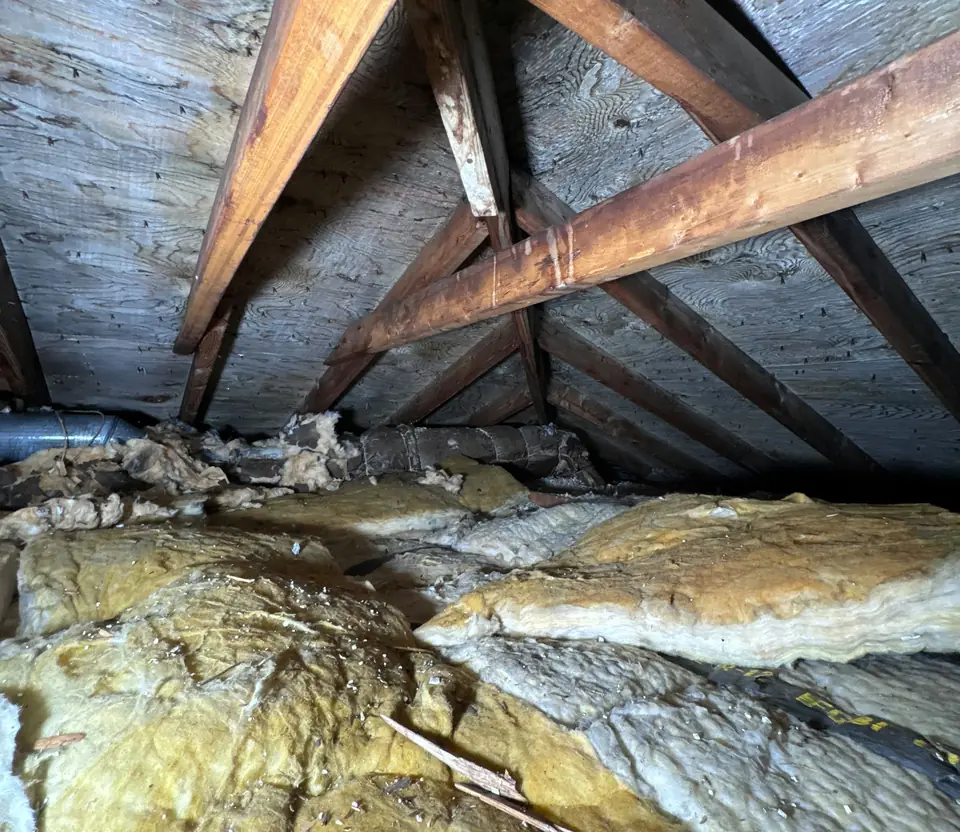
Old fiberglass in Wausau attics is often 4 to 6 inches, matted and gray at the top where it filtered leaking air. That's a sign of where the leaks are, and those spots get sealed before anything is added.
Attic depth check
An estimate, not a quoteWith 5 inches of loose fiberglass you have roughly R-12. Reaching R-49 takes about 10.5 more inches of settled cellulose, after air sealing.
Settled R per inch, midpoints of the Building America Solution Center (PNNL) ranges: cellulose 3.2–3.8, fiberglass 2.2–2.7, rock wool 3.0–3.3. Real depth varies with the product's bag label.
Air Sealing the Attic Floor Before Any Insulation Goes In
Sealing is slow, crawling work at the edges of the attic where the roof gets low, which is why it's the part some bids skip. Here's a typical Wausau attic floor seen from above, with the holes we look for numbered roughly by how much air they move. Tap a number.
Chimney surrounds, plumbing walls and the soffit over the kitchen cabinets that open straight into the attic. These move the most air. Covered with rigid material and sealed; around a chimney, metal flashing and fire-rated sealant, never foam against the masonry.
Every interior wall has a gap where the drywall meets the plate, and in a Wausau house that's dozens of feet of crack. Each run gets foamed or caulked along its length.
Older can lights leak like little chimneys. They get airtight, insulation-contact covers or a sealed box built over them, with the clearance the fixture calls for.
A bath fan dumping warm, wet air into the attic frosts the roof deck all winter. It gets ducted outside, and the housing gets sealed to the ceiling.
A loose lid in the ceiling. Weatherstripped, rigid foam on the back, and a dam around the opening so the new fill stays put.
Every wire and pipe that comes up through a top plate leaves a hole around it. Small, but there are lots of them, and they get foamed one by one.
Wisconsin's code tests airtightness on new homes with a blower door at less than 7 air changes per hour at 50 pascals (SPS 322.37). An existing Wausau house is often far leakier, which is why sealing changes how the house feels more than the extra inches do.
Spray Foam Attic Insulation vs. Blown-In on the Attic Floor
Both are good. They insulate different surfaces. Blown-in fill goes on the attic floor and leaves the attic cold and ventilated. Spray foam goes on the underside of the roof deck and makes the attic part of the heated house.
| Your attic | Usually the better buy |
|---|---|
| Open attic floor, room to crawl, no ductwork up there | Seal, then blown-in cellulose or fiberglass to R-49+ |
| Furnace or ducts in the attic | Closed-cell foam on the roof deck, so the equipment sits in heated space |
| Cathedral or vaulted ceiling, no attic at all | Foam in the rafter bays, or foam plus fill, covered with drywall |
| Finished attic room with knee walls | Foam on the knee walls and the slopes; fill on the floor behind them |
| Very low eaves where nobody can reach the plates | Foam at the eaves, fill on the rest |
Foam on a roof deck in this climate is closed-cell, or open-cell with a vapor retarder, because open-cell lets indoor moisture through to a cold deck. The difference is on the closed and open cell page.
Garage Ceilings, Cathedral Ceilings and Knee Walls in the Attic
Garage ceiling with a room above
A bedroom over a garage sits on a floor that's cold on the underside. The code number for floors here is R-30, or a cavity filled to at least R-19. Batts stapled up in the joists slump and leave gaps at the rim; foam or a dense-packed cavity stays tight, and air sealing the rim matters as much as depth. The garage side then gets drywall as the thermal barrier.
Exposed garage ceiling with an attic above
A detached garage with trusses is just a small attic: seal, then blow fill on a drywall ceiling. If you want to heat the garage, plan the walls too.
Cathedral ceilings
No attic means no room for 15 inches of fill. Closed-cell foam in the rafter bays, alone or with fill under it, gets the R-value in the depth you have, and it doubles as the vapor control.
Re-Insulate the Attic or Remove What's There First?
Most attics can be topped up. Old insulation comes out when it's wet, moldy, mouse-fouled or smoke-damaged, when it's vermiculite (which the EPA says to assume contains asbestos and leave undisturbed until a professional deals with it), or when the plan is foam on the deck and the old fill would just sit in the way.
When it does come out, it gets vacuumed into bags from outside so the house stays clean. That work is on the insulation removal page; the attic then gets sealed and re-insulated in the same visit.
Attic Insulation Companies Near Me: Rebates, Timing and What We Check
Focus on Energy's 2026 rebates for a single-family home pay $650 to $850 for attic insulation and $850 to $1,475 for ENERGY STAR air sealing, depending on household income. The insulation has to be installed by a participating Trade Ally contractor, air sealing requires an energy assessment, and the house must be on participating utilities. Wisconsin Public Service, the gas and electric utility for much of the Wausau area, is one. Confirm the contractor's status and your deadline with Focus on Energy before you count on the check.
Attic work can happen any month. Winter is actually a good time to find leaks, because frost on the underside of the roof deck and melted spots in the snow point right at them. Send a photo of your roof the morning after a snowfall and we can usually tell you where to look.
Not sure the attic is the whole story? The homepage walks through every part of the house we insulate as a spray foam insulation contractor in Wausau.
Attic and Ceiling Insulation: Common Questions
Can you add attic insulation over what is already there?
Usually, yes, if the old insulation is dry, clean and not hiding air leaks you need to get at. The catch is the sealing: it has to happen at the attic floor, under the old fill, so the old material gets pulled back, the leaks get sealed, and then everything gets topped up. If the old fill is wet, mouse-fouled or vermiculite, it comes out first.
Will more attic insulation stop my ice dams by itself?
Not reliably. University of Minnesota Extension's ice dam guidance puts air leakage through ceiling openings as the major cause of the heat loss behind ice dams and lists sealing the ceiling first. Insulation without sealing slows the heat; it doesn't stop warm air from carrying it.
What about the attic hatch or pull-down stairs?
A hatch is a hole in the ceiling with a loose lid. We weatherstrip it, add rigid foam to the back of the door and build a dam around the opening so the blown-in fill doesn't spill when you open it.
How long does an attic job take?
Most single attics are a one-day job for sealing and blowing in. Removal of old fill, a lot of recessed lights, or spray foam on a roof deck add time. We give you the schedule with the estimate.
Is the best attic insulation for a cold climate always spray foam?
No. For a ventilated attic with a floor you can reach, sealed and then filled with cellulose or fiberglass to R-49 or more is hard to beat on cost. Foam on the roof deck makes sense when the attic holds ductwork or a furnace, or when there is no attic floor at all, as in a cathedral ceiling.