Loose fill · dense-pack · attic floors
Blown-In Insulation Contractors in Wausau, WI
A spray foam company telling you blown-in is often the better buy sounds odd. It's still true. On an open attic floor, sealed air leaks plus 14 or 15 inches of blown cellulose gets you to R-49 for less than foam would, and it's what we'll quote.
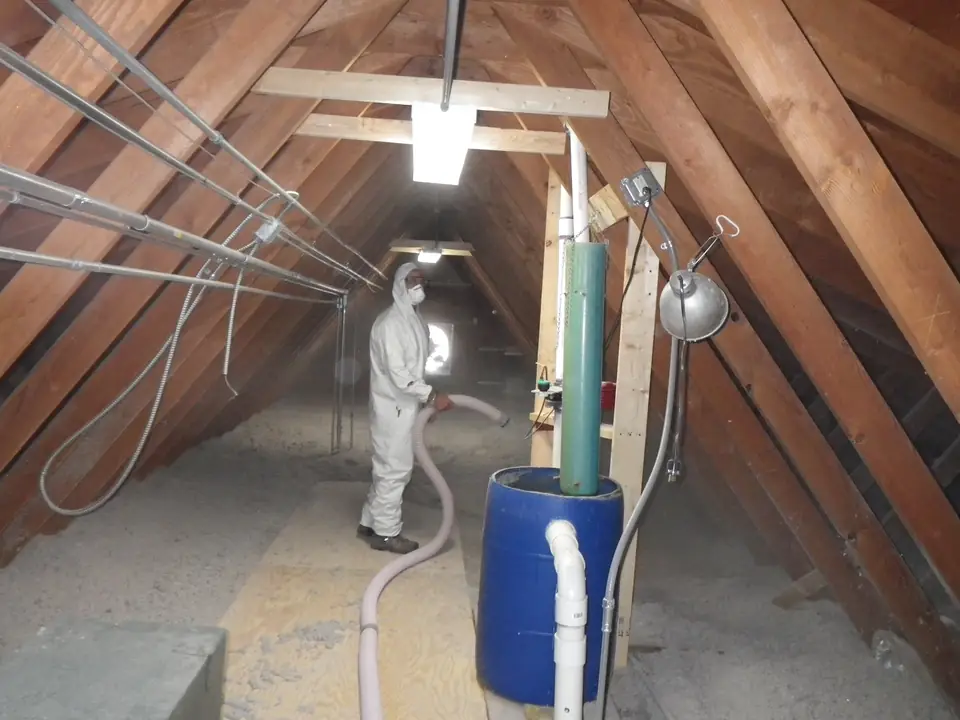
Blown-in fills two kinds of space: open attic floors (loose fill, blown in a deep, even layer) and closed wall cavities (dense-pack, blown in hard through small holes until the bay is full). Both take a truck-mounted machine, a long hose and a crew that knows when to stop.
Blown-In Insulation Near Me: Cellulose, Fiberglass or Mineral Wool?
All three are sold as loose fill and all three work. They differ in R-value per inch, weight and how they handle water. Sort the table by any column.
| What to know | |||
|---|---|---|---|
| Cellulose | R-3.2 to R-3.8 | 12.9 to 15.3 | Recycled paper treated for fire and pests. Dense enough to slow air a little; the usual choice for dense-packing closed walls. |
| Fiberglass (loose fill) | R-2.2 to R-2.7 | 18.1 to 22.3 | Light, doesn't absorb water, lowest R per inch, so it goes in deepest for the same R. |
| Mineral wool / rock wool | R-3 to R-3.3 | 14.8 to 16.3 | Made from stone or slag fibers. Doesn't burn, sheds water, heavier than fiberglass. |
Settled R per inch: Building America Solution Center (PNNL), loose-fill insulation. Each product's bag chart gives its own installed and settled depths; we follow the bag.
How Deep Blown-In Insulation Needs to Be for R-38, R-49 and R-60
Cellulose at about R-3.50 per inch settled: R-38 is about 10.9 in., R-49 about 14.0 in., R-60 about 17.1 in.
Fiberglass (loose fill) at about R-2.45 per inch settled: R-38 is about 15.5 in., R-49 about 20.0 in., R-60 about 24.5 in.
Mineral wool / rock wool at about R-3.15 per inch settled: R-38 is about 12.1 in., R-49 about 15.6 in., R-60 about 19.0 in.
R-49 is the code minimum for a new ceiling in Marathon County, and ENERGY STAR suggests R-60 when an attic starts empty. Depth matters at the edges too: the fill has to reach full depth over the top plates, which is why baffles go in at every rafter bay before the blow, to hold the fill back from the soffit vents.
Ruler uses midpoints of PNNL's settled ranges; the scale is 26 inches tall.
Blown-In Cellulose Insulation for Closed Walls: Dense-Pack
Loose cellulose poured into a wall slumps and leaves a cold gap at the top. Dense-packing doesn't: a tube goes into the bay through a hole, and cellulose is blown in at high pressure until the bay is packed tight from bottom to top. Packed that firmly it doesn't settle, and it slows air moving through the wall as well as heat.
It's the standard way to insulate the closed walls of older houses, and Wausau has a lot of them: about a quarter of the city's homes were built before 1940. The holes go through the siding (or under a lifted course of it) or through plaster, one or two per stud bay, and get plugged and patched.
Before a single bay is filled we check it for blocking, knob-and-tube wiring and old fill, and in balloon-framed houses we block the top and bottom of each bay first. The wall side of this, including injection foam and re-siding, is on the wall insulation page.
Cellulose Insulation, Moisture and Where the Vapor Retarder Goes
Cellulose holds some moisture and gives it back, which is fine in a wall or attic that can dry. It isn't fine sitting in water: a roof leak or an ice dam that soaks it leaves wet cellulose that matts down and loses its R-value, and it has to come out. That's one reason attic sealing and ice dam prevention come first.
Wisconsin's code puts the vapor retarder on the warm-in-winter side of the insulation in frame walls, floors and ceilings. In new or opened walls that's a sheet or a vapor-retarder product; in an existing finished house we talk through what's acceptable before dense-packing.
Wet-spray cellulose, sprayed damp into open stud walls and screeded flush, is another option for new walls. It needs to dry before drywall, so it fits a remodel schedule better in summer than in a Wausau January.
Blown-In Insulation Installers Near Me: The Five Steps of a Blow
-
Step 1: Air seal and prep
Top plates, chases, fans, lights and the hatch get sealed first. Then baffles at every rafter bay at the eaves, to keep fill out of the soffit vents, and dams around chimneys and the hatch opening.
-
Step 2: Depth markers
Rulers stapled to the framing across the attic, so the depth can be checked during the blow and by anyone who looks later.
-
Step 3: Blow
The machine stays in the truck; the hose comes up through the hatch or a gable. One person blows, one feeds the machine, and they stay in contact the whole time.
-
Step 4: Level and check
Even depth to the bag chart's installed figure, full coverage over the top plates, and nothing blowing into the soffit vents.
-
Step 5: Card on the hatch
Material, depth and R-value written on a card at the hatch, so the next owner knows what's up there.
If old blown-in fill has to come out first, it's vacuumed out the same way in reverse; see insulation removal. Attic sealing, ice dams and garage ceilings are covered on the attic page. Blown-in is one of several materials we install; our Wausau spray foam insulation homepage shows where each one fits in a house.
Loose-Fill and Dense-Pack Questions
How much does blown-in insulation settle?
Loose fill settles after it is installed, which is why R-values are quoted as settled values and why bags list a minimum settled thickness. We blow to the bag chart's installed depth for the target R, and staple depth markers to the framing so you can check it later.
Do I need a vapor barrier with blown-in insulation?
On an attic floor over an existing ceiling, the air sealing does the important work. In walls and new ceilings, Wisconsin's code calls for a vapor retarder on the warm-in-winter side of the insulation in frame walls, floors and ceilings, which in an existing house can be vapor-retarder paint or the existing finish, depending on what the inspector accepts.
Can blown-in insulation go over old insulation?
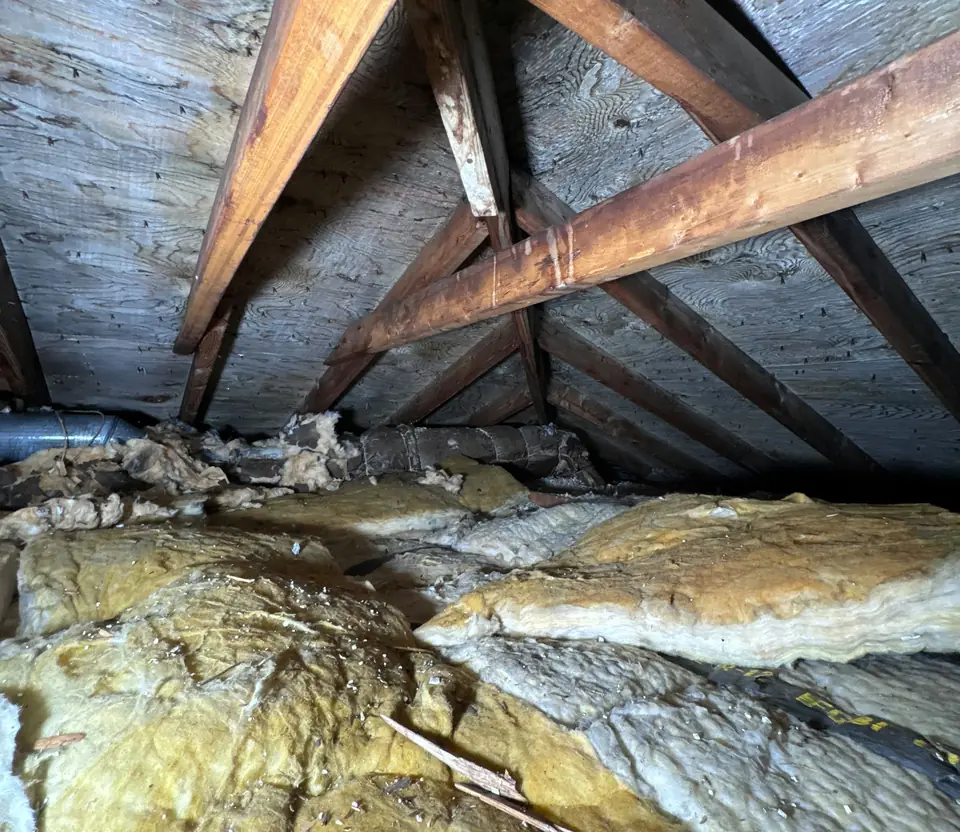
Yes, if the old material is dry and clean and the air sealing has been done underneath it. Wet, moldy or mouse-fouled fill, and any vermiculite, gets dealt with first.
Is cellulose a fire hazard?
Cellulose insulation is treated with fire retardants. Like any insulation it is kept back from chimneys, flues and non-rated recessed lights with proper dams and clearances.