Flat roofs · low-slope roofs · metal roof retrofits
Spray Foam Roof Insulation in Wausau, WI
A flat roof with old, thin insulation and a membrane that leaks at every seam can be fixed two ways: tear it all off and start over, or, if the deck and the old roof are sound and dry, spray closed-cell foam over the top and coat it. The foam is the insulation, the coating is the weathering surface, and there are no seams.
That second way is a spray foam roof. It suits commercial buildings, shops and flat-roofed additions around Wausau. It doesn't suit every roof, and the first job is finding out whether yours qualifies.
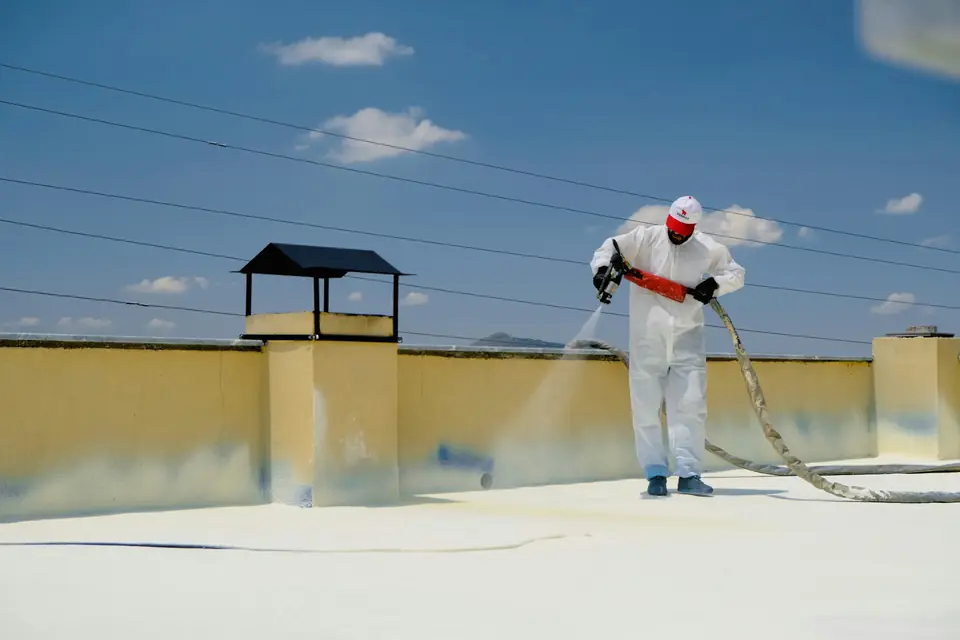
Spray Polyurethane Foam Roofing Over Your Existing Roof
What's up there now decides the prep. Pick the closest match:
Built-up roof (tar and gravel)
Loose gravel is removed and the surface cleaned. Blisters get cut out. The existing insulation is surveyed for moisture; wet areas are cut out and replaced so foam never goes over trapped water. Then foam and coating.
Single-ply roof membrane (EPDM, TPO, PVC)
Depends entirely on condition and how it's attached. A loose or ballasted membrane usually comes off; a well-adhered one may be prepared and primed for foam per the product requirements. This is the substrate where we're most likely to say tear-off.
Metal roof
Foam sprayed over the top of a ribbed metal roof fills the ribs, covers every fastener and lap, and adds insulation from outside without touching the inside of the building. Rust is cleaned and treated first. For foam on the underside of a pole barn roof, see pole barn insulation.
Bare deck, new roof
On new construction or after a tear-off, foam goes on the clean, dry deck (with any separation or cover board the system calls for) and is built up to thickness, sloped toward drains where needed.
How Thick a Spray Foam Roof Should Be, and the R-Value It Gives
Every inch of closed-cell foam (how it compares with open-cell is on closed and open cell spray foam) adds roughly R-6 (the Department of Energy's guide gives about R-6.1 per inch for 2-pound closed-cell; roofing foams publish their own values). That means the R-value of the roof is set by how thick it's sprayed, and thickness can vary across the roof to build slope toward drains, which fixes ponding at the same time.
Commercial buildings in Wisconsin follow the 2021 IECC (in effect since November 1, 2025), which sets the minimum roof insulation; we design the thickness to it, or past it. Farm buildings used only for farming are exempt from the commercial code.
Closed cell spray foam roof insulation: thickness to R-value
Drag to changeApproximate insulation value:
At R-6.1 per inch (DOE Building America, aged closed-cell). Check the roofing system's own data. Not a design or a quote.
Spray Foam Roofing Systems: Coating, Recoats and Inspections
The coating is not optional. Foam degrades under ultraviolet light and darkens as it does. Spray foam roofs are covered with a UV-protective coating or a layer of aggregate. Common coatings are acrylic, butyl, silicone, polyurethane and polyurea (IBHS).
Upkeep decides how long it lasts. Foam sheds water well enough that a roof can wear for a long time before the first leak, which is exactly why the upkeep gets forgotten. Follow the life of a foam roof below.
Year 0: spraying and coating the roof
Foam goes on a clean, dry roof in passes, built thicker where it needs to slope toward the drains, then the coating goes on within the window the system allows. Bare foam darkens and starts to degrade in sunlight, so it is not left uncoated.
Each spring: a roof inspection
Walk the roof once the snow is off. Look for worn or thin coating, punctures from dropped tools, bird pecking and anything that holds water. Small damage gets sealed with the same coating. In winter, if the roof is shoveled, plastic shovels and a few inches of snow left on the surface protect it.
Years 7 to 10: recoating
Budget for a recoat in this range, and ask for the coating maker's own figure, which depends on the product and how thick it went on. The recoat uses the same chemistry as the original: silicone on silicone, acrylic on acrylic. The foam underneath stays put.
Worn-through coating: re-foam and recoat
Let the coating wear down to the foam and the fix gets bigger: the damaged foam surface is ground off to sound material, a new lift of foam is sprayed and a full coating system goes back on. Inspections are cheap by comparison.
Sources: IBHS, "Spray Foam" (coatings, UV); D. Fricklas, "Quick Fixes for Sprayed Polyurethane Roof Systems," Buildings (2013) (same-chemistry recoats, rescarify and re-foam, inspections, budgeting a recoat about every 7 to 10 years).
Roof Insulation Services: Foam on Top vs. Insulating Roof Rafters From Below
There are two ways to get insulation into a roof, and people mix them up:
- From above (this page). Foam and coating on top of a flat or low-slope roof. It replaces the roofing and insulates in one system, and the building can stay in use underneath.
- From below. Foam sprayed on the underside of the roof deck, between rafters or under steel. It's insulation, not roofing. In a house that's attic and cathedral ceiling insulation; in a shop or barn it's pole barn and metal building insulation.
Foam on top is the better buy when the roof needs replacing anyway. When the roof is fine and the building is cold, insulating from below is cheaper.
Permits, Weather and When a Spray Foam Roof Isn't the Answer
Permits. Inside the City of Wausau, permits go through the city's Inspections department and its online Evolve portal, and the city lists re-roofing among the work it permits. Out in the towns, check with the town and Marathon County. We confirm what's needed before we schedule.
Weather. Foam and coatings go on a dry roof within the temperature and humidity limits on the product sheets, which in Wausau means a spring-to-fall season.
When we'd say no: a rotten or soft deck (that's structural repair first); a roof where the moisture survey shows most of the insulation is wet (tear-off is cheaper than cutting it all out); a pitched shingle roof on a house; a building where nobody will inspect or recoat the roof in the next decade.
The rest of what we do as a spray foam insulation contractor in the Wausau area is on the homepage.
Foam Roof Questions
Can spray foam go over my existing flat roof?
Often, if the deck is sound and the existing roof and insulation under it are dry. Wet insulation found in the survey is cut out and replaced first. Loose or badly deteriorated membranes come off.
What protects the foam from the sun?
A coating, or a layer of aggregate. Foam left bare degrades under ultraviolet light. Common coatings over spray foam include acrylic, butyl, silicone, polyurethane and polyurea (IBHS).
How often does a foam roof need recoating?
It depends on the coating and its thickness, so ask for the manufacturer's figure. One long-time roofing consultant writing in Buildings magazine suggests budgeting for a recoat roughly every 7 to 10 years and inspecting regularly in between.
Do you put spray foam roofing on houses?
On a flat or low-slope section, like a porch roof or a flat-roofed addition, it can make sense. On a pitched shingle roof, no. For insulating a house roof from inside, see attic insulation.